LIMS

Every sample should tell its complete story.

Connect experiments, samples, instruments, results, review and reporting in one traceable laboratory system.

Why LIMS

You may need a LIMS when the work is visible, but the complete record is not.

Your team may already know how the laboratory works. The difficulty appears when sample status, instrument data, decisions and evidence live in different places.

A LIMS connects those records so people can find the current state without asking around, copying information between systems or reconstructing the history later.

This is where continuity helps

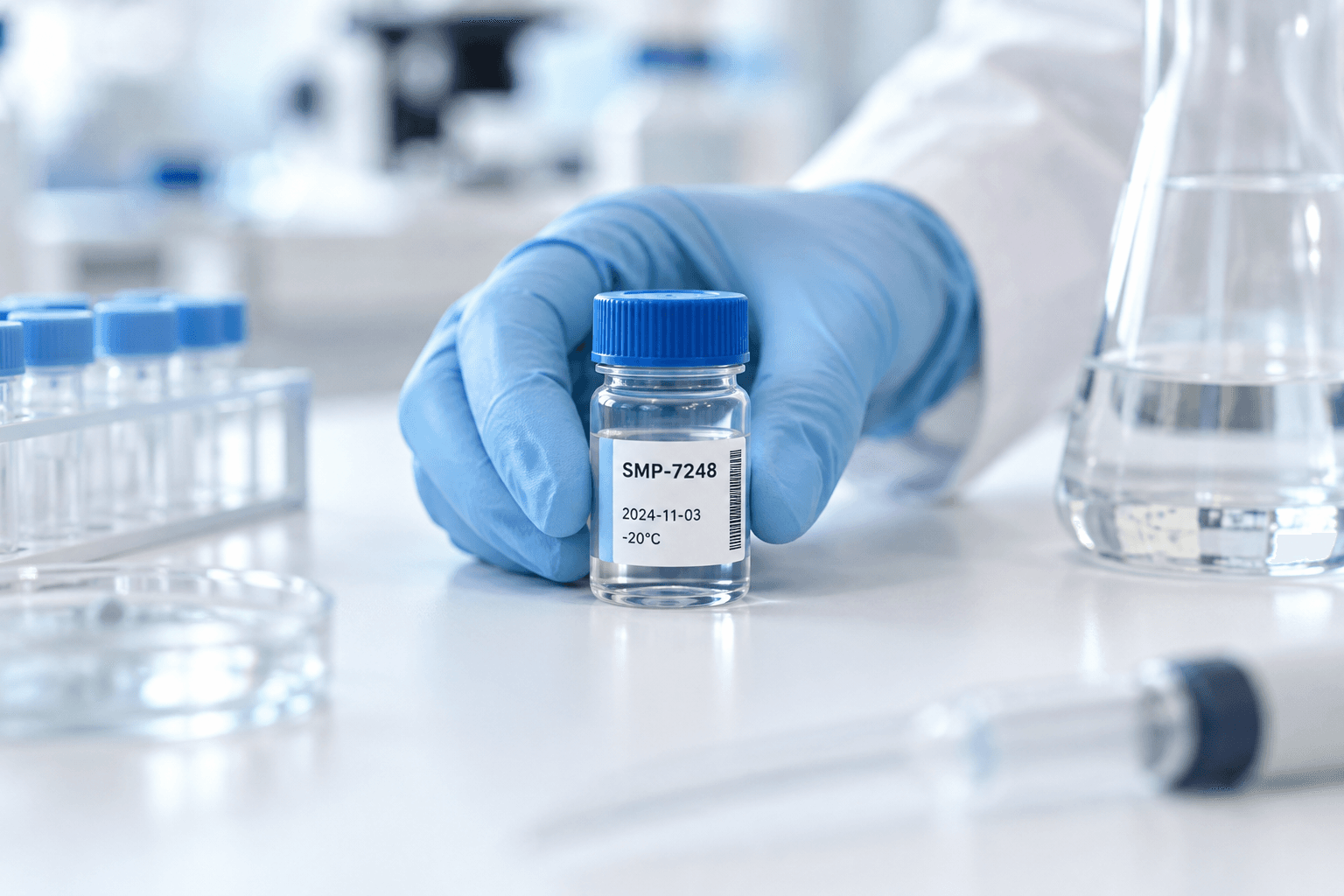
A central sample record shows its identity, current state, location, history and related work.

See the connected path

Can you reconstruct this sample in five minutes?

Choose any reported result. Could you quickly identify the original sample, the method used, the instrument that produced the measurement and the person who approved it?

The problem is rarely one missing document. It is the loss of connection between records as work moves through the laboratory.

Without a LIMS

The information exists, but each part must be found, interpreted and matched manually.

  1. Notebook
  2. Spreadsheet
  3. Shared folder
  4. Instrument PC
  5. Email approval
Result or context missing

With a LIMS

The sample, work, result and decision remain part of one traceable record.

  1. Registered
  2. Prepared
  3. Measured
  4. Reviewed
  5. Reported

A connected record does not remove scientific judgement. It gives the people making decisions the context and evidence they need to apply that judgement confidently.

Where does your laboratory lose continuity?

Select a handoff to see what becomes difficult to find, verify or prove when the records separate.

  1. Experiment
  2. Sample
  3. Instrument
  4. Result
  5. Review
  6. Report

Selected handoff

Result to review

Files, context and approval history separate here.

What becomes difficult

  • Judging whether the result is valid
  • Finding the method and raw evidence
  • Understanding previous comments or decisions

What a LIMS keeps attached

  • Raw result and method
  • Sample and instrument context
  • Validation state
  • Reviewer, decision and timestamp
4 of 5

What changes when the laboratory flow stays connected?

Choose the outcome that matters most to your operation. The same connected record supports faster work today and stronger evidence later.

Before: the reviewer receives a disconnected result

A value arrives without its method, sample condition, instrument state, raw source or previous comments.

  • Sample identity
  • Method version
  • Instrument
  • Raw file
  • Validation state
  • Comments
  • Approval

After: the result arrives with its evidence

The reviewer can inspect the result and the context needed to decide whether it can be accepted.

The reviewer sees the result and the evidence needed to trust it.

Connected scope

A useful LIMS connects more than samples.

The system should reflect the objects, relationships and decisions that matter in your laboratory. It does not need to force every laboratory into the same template.

Experiments and work

Connect scientific intent to released activities, responsibilities and execution history.

  • Projects and experiments
  • Processes and activities
  • Recipes and methods
  • Work assignments
  • Execution attempts

Samples and materials

Preserve identity and history as physical materials move, split, combine or change.

  • Sample identity
  • State and location
  • Genealogy
  • Batch position
  • Chain of custody
  • Material lots

Instruments and resources

Connect laboratory work to the equipment, people and materials required to perform it.

  • Equipment capability
  • Calibration and maintenance
  • Reservations
  • Operator qualification
  • Material readiness
  • Instrument files

Results and evidence

Keep measurements, analysis, review and reporting connected to their original sources.

  • Raw artifacts
  • Measurements
  • Validation
  • Analysis
  • Deviations
  • Approvals
  • Reports

A LIMS should fit the laboratory you already run.

Start with the real workflow, connect what matters and introduce control without stopping the work.

The goal is not to reproduce every spreadsheet inside a larger system. The goal is to identify which records must remain connected, which decisions need control and where integration can remove repeated work.

Selected step

Define the record

Decide what must follow every sample, result and decision. Keep only the fields, rules and evidence your laboratory actually needs.

What we establish

  • Objects and relationships
  • States and transitions
  • Required evidence
  • Permissions and approvals
  • Version and amendment rules

Deployment and integration

Keep the system close to the laboratory environment.

A LIMS can operate inside your infrastructure and connect to the systems your teams already use. The architecture should follow your requirements for data location, security, availability and integration.

On-premise deployment
Keep sensitive laboratory records and integrations within your controlled environment where required.
Instrument integration
Connect file-based, API-based and legacy sources while preserving raw evidence and visible validation states.
Existing-system integration
Exchange approved information with ERP, reporting, identity, storage and operational systems.
Controlled migration
Move the records that must remain usable and traceable. Avoid importing obsolete structure simply because it already exists.

Questions

Questions laboratories usually ask.

Start with the workflow you have. The system boundary can be defined after the gaps and responsibilities are clear.

What is a LIMS?

A laboratory information management system connects the records and workflows surrounding experiments, samples, instruments, results, review and reporting. Its exact scope should reflect how your laboratory operates.

Do we need to replace every spreadsheet and existing system?

Not necessarily. Some existing tools may remain useful. The first task is to identify where disconnected records create risk, delay or repeated work, then decide which responsibilities belong inside the LIMS.

Can you integrate older laboratory instruments?

Often, yes. The useful integration may use exported files, watched folders, vendor APIs, database access or a focused adapter. The approach depends on the instrument and the evidence that must be preserved.

Can the LIMS run on-premise?

Yes. The deployment can be designed around your infrastructure, security, availability and data-location requirements.

Can it support research workflows that change frequently?

Yes. Research work still needs controlled identity, versioning and evidence, but it should not be forced into a rigid production workflow. The data and workflow model can distinguish draft plans, released work, retries, rework and amendments.

Can it support quality-control laboratories?

Yes. A controlled workflow can connect samples, methods, instruments, specifications, deviations, review and reporting while keeping the original evidence available.

Do we need to define the whole laboratory before starting?

No. A focused first process is often the clearest way to validate the record model, integration approach and user responsibilities before expanding the system.

How do we know where to begin?

Start with one workflow that is difficult to trace, review or scale. Following it from request to approved result usually reveals the most important gaps.

See where your laboratory loses continuity.

Bring us one workflow that is difficult to trace, review or scale. We will map the records, handoffs and evidence around it, then show what a connected system could change.

You do not need a finished specification. A sample workflow, recurring problem or difficult handoff is enough to begin.